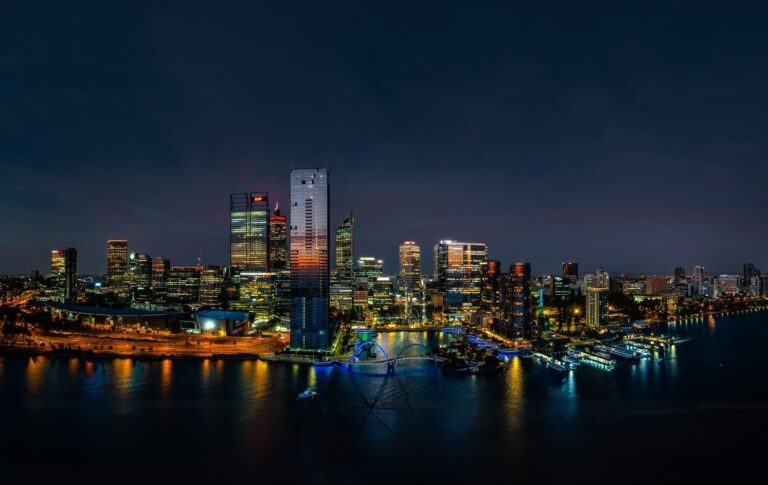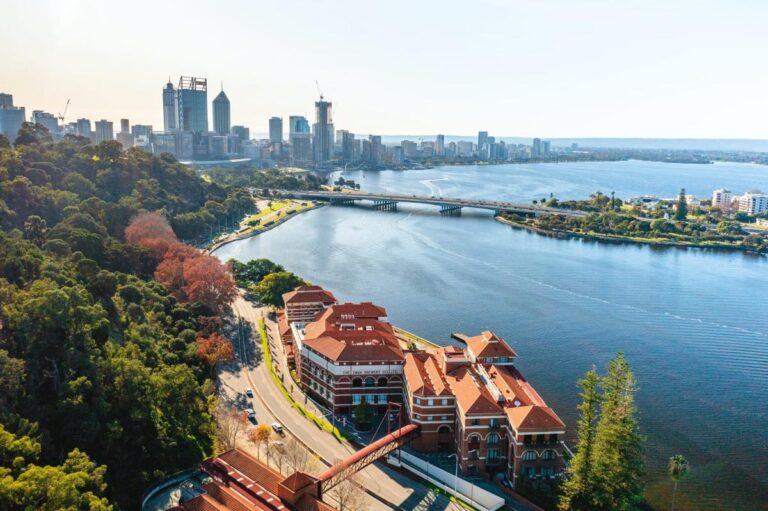
Marinas, sailing clubs, boat harbours, and waterfront facilities present a security challenge that is genuinely different to most built environments. The combination of high-value assets, open waterside access, after-hours vulnerability, and a member or visitor population that expects easy, welcoming access creates a risk profile that standard commercial security templates don’t adequately address.
Smartsec Security Solutions has delivered independent security risk assessments for waterfront and marine facilities in Perth, including the Fremantle Sailing Club. This article draws on that experience to explain what a marina and waterfront security assessment involves, what the specific risk environment looks like, and what good security looks like for these facilities — without the bias of a vendor trying to sell a product.
Why Marinas and Waterfront Facilities Are Different
Most built environments have a defined perimeter. You control who enters and where they enter from. Marinas and waterfront facilities don’t have this luxury — by definition, one boundary is the water, and water-side access cannot be fully controlled in the way that a fenced land perimeter can.
This creates a fundamentally different security problem. An intruder attempting to access a marina doesn’t need to defeat a gate or a CCTV-monitored entry point — they can approach by water, by kayak, by swimming, or simply by walking along a public foreshore. No technology eliminates this exposure. A good security assessment doesn’t pretend it can. Instead, it identifies which controls are realistic, which risks are manageable, and what a proportionate, operationally workable security posture looks like for a facility that needs to welcome members while managing the exposure that openness creates.
The assets at risk in a marina environment are also distinct. Vessels — particularly larger yachts and motorboats — represent significant financial value, are relatively mobile, and carry contents including navigation equipment, outboard motors, safety equipment, personal belongings, and in some cases fuel. The combination of high-value, accessible, and often unattended assets makes marinas an environment where opportunistic and targeted theft both occur regularly.
The Specific Threat Profile for WA Marina and Waterfront Facilities
Western Australia’s marina and waterfront environment has a specific threat landscape shaped by the nature of our coastal geography, the culture of recreational boating, and the operational characteristics of the facilities themselves.
Vessel and equipment theft. Outboard motors are one of the highest-theft items in the WA marine environment — they are valuable, relatively easy to remove from a vessel, and straightforward to move off-site. Navigation electronics, fishing equipment, safety gear, and personal belongings left on board are also consistently targeted. After-hours periods when the facility is largely unoccupied represent the highest-risk window.
Vandalism and opportunistic damage. Marine environments attract foot traffic — foreshore walkers, joggers, cyclists, and the general public. Where the boundary between public foreshore and the marina facility is unclear or poorly defined, opportunistic vandalism of vessels, infrastructure, and facilities is a common problem. Territorial definition — one of the core CPTED principles — is particularly relevant here.
Unauthorised vessel access and use. Beyond theft, unauthorised boarding and use of vessels creates both a security and a liability concern for marina operators. The risk is greatest where access to pontoons and berths is not adequately controlled and where vessels are left unattended for extended periods.
After-hours facility access. Sailing clubs and marina facilities typically operate with clubhouse buildings, equipment storage, bar and catering areas, and administrative offices — all of which carry the same after-hours security exposures as any commercial building. The difference is that marina facilities are often in relatively isolated waterfront locations with longer emergency response times than inner-city commercial premises.
Event security considerations. Many sailing clubs and marina facilities host significant events — regattas, social events, corporate functions, and community activities. Events that bring large numbers of people onto the premises create a temporarily different security environment, with crowd management, access control, and after-hours exposure all requiring event-specific consideration.
Waterside intrusion from public foreshore. Perth’s foreshore areas are public and heavily used. Where marina facilities abut public foreshore — as is the case at many of Perth’s sailing clubs and boat harbours — the interface between public and private space is a consistent security challenge. CPTED principles around territorial reinforcement and natural surveillance are particularly relevant at this interface.
What a Marina and Waterfront Security Assessment Covers
Every assessment is scoped to the specific facility and operational context. The following components reflect what a well-structured independent assessment for a marina or waterfront facility typically addresses.
Site context and threat environment. Understanding the facility’s location, surroundings, operating model, membership profile, event calendar, and incident history. A marina adjacent to a busy public foreshore has different exposure to one in a gated harbour. A sailing club that hosts major regattas has different event-period risks to one that operates primarily as a social club.
Perimeter and boundary assessment. Evaluating the land-side perimeter — fencing, gates, access points, lighting, and the definition of boundaries between public and member/private areas. The water-side boundary is assessed not for controllability (it cannot be fully controlled) but for the realistic mitigation measures available — lighting coverage of the water interface, CCTV coverage of pontoon approaches, and the natural surveillance provided by permanently occupied vessels and active facility use.
Access control for pontoons and berths. Pontoon access is the most operationally sensitive access control challenge in a marina environment. Systems need to control who can reach berthed vessels while remaining practical for members, guests, and service providers. The assessment evaluates whether existing arrangements are adequate, whether credentials are current and managed, and whether the access control configuration reflects the actual risk rather than what was convenient at the time of installation.
CCTV coverage and performance. Marina environments present specific challenges for CCTV — vessel masts and rigging obstruct sightlines, pontoon movement affects camera positioning, marine environments accelerate equipment degradation, and the large open areas of many marinas require careful camera placement to achieve meaningful coverage. The assessment evaluates coverage of key areas including entry points, pontoon access, car parks, vessel storage areas, and clubhouse facilities — and identifies whether existing cameras are positioned and configured to produce footage that is actually usable.
Lighting — land-side and water-side. Adequate lighting across car parks, pedestrian paths, pontoon approaches, and facility entries is a fundamental security control and a CPTED requirement. The assessment evaluates lighting performance against AS/NZS 1158 for relevant areas, identifies dark zones that create concealment opportunities, and recommends improvements that balance security performance with amenity and the character of the waterfront environment.
Clubhouse and facility security. The assessment covers the built facilities — clubhouse, equipment storage, fuel storage, workshop areas, administrative offices, and any catering or bar areas. Access control, alarm arrangements, after-hours procedures, key management, and CCTV coverage are all evaluated. For sailing clubs, the security of competitive equipment — dinghies, sails, rigging, and electronics — is a specific consideration given the high value and relative portability of these assets.
Event security considerations. For facilities that host regular events, the assessment considers whether security arrangements scale appropriately for event periods — whether access control is adequate when visitor numbers increase significantly, whether staff are equipped to manage security-related incidents during events, and whether event-specific procedures are in place and understood.
After-hours vulnerability. Marina and waterfront facilities are often most vulnerable after hours — when members have left, the car park is empty, and the natural surveillance provided by activity and occupancy disappears. The assessment specifically examines after-hours conditions: what monitoring is in place, how incidents are detected and responded to, and whether the facility’s security posture after hours reflects the actual risk exposure.
Risk rating and prioritisation. All findings are rated using a likelihood-consequence matrix aligned with ISO 31000:2018, producing a prioritised risk register. This is essential for marina and waterfront facilities, where the range of potential security investments — from pontoon access control upgrades to CCTV system replacements to lighting improvements — can be extensive. Prioritisation ensures resources are directed toward the measures that will deliver the greatest risk reduction.
CPTED Principles in the Marina Context
Crime Prevention Through Environmental Design is particularly relevant to marina and waterfront facilities, where the design and management of the space has a direct and significant effect on security outcomes.
Natural surveillance — the principle that spaces are safer when they can be seen by legitimate users — is both a strength and a challenge in marina environments. Active facilities with members regularly present provide good natural surveillance of vessels and pontoon areas. Facilities that are quiet for extended periods lose this benefit. Design and operational decisions that encourage legitimate presence and activity — particularly in the after-hours periods when risk is highest — directly support security outcomes.
Territorial reinforcement — making clear where public space ends and private or member space begins — is one of the most important CPTED considerations for facilities that adjoin public foreshore. Where this boundary is unclear, the facility effectively becomes an extension of the public domain, with the access and behaviour norms that implies. Clear, well-designed territorial definition — through landscaping, signage, material changes, and access control — reduces this exposure without creating an environment that feels hostile or unwelcoming to legitimate users.
Natural access control — channelling movement through defined, observable routes — applies both to the land-side approaches to the facility and to the movement of people within it. Pontoon layouts, gate positions, lighting, and path design all influence how people move through the facility and how visible that movement is to staff, members, and other legitimate users.
Perth’s Marina and Waterfront Security Context
Perth has a significant and growing marina and waterfront facility sector. The Fremantle harbour precinct, Hillarys Boat Harbour, Mindarie Marina, Mandurah Ocean Marina, Rockingham Yacht Club, Royal Perth Yacht Club, Ocean Marina Jurien Bay, and numerous smaller sailing clubs and boat harbours across the metropolitan and regional areas all face the security challenges described in this article.
Smartsec Security Solutions has delivered independent security risk assessments for waterfront facilities in Perth, including the Fremantle Sailing Club. Our assessments are grounded in direct knowledge of the WA marine environment, the specific threat profile of Perth waterfront facilities, and the operational realities of running a membership-based club or marina.
Why Independent Advice Matters for Marina and Waterfront Security
Marina and waterfront facilities frequently receive security advice from CCTV installers, access control vendors, and security guarding companies — all of whom have a commercial interest in the outcome of any assessment. The result is often camera scatter, over-specified access control, or guarding contracts that don’t reflect the actual risk.
An independent assessment has no commercial interest in the outcome. The advice is based on what the risk evidence shows and what the facility actually needs — which is sometimes less technology than vendors recommend, and sometimes a different configuration than what’s easiest to install.
For sailing clubs and marina operators who are accountable to members, boards, and insurers for their security decisions, independent advice provides a stronger governance position and a more defensible basis for investment decisions.
Engaging Smartsec for a Marina or Waterfront Security Assessment in Perth
Smartsec Security Solutions delivers independent physical security risk assessments for marina operators, sailing clubs, boat harbours, and waterfront facilities across Perth and regional WA.
Our assessments are aligned with ISO 31000:2018 and ISO 22341:2021, vendor-neutral, and tailored to the specific operational environment of waterfront facilities. We understand the unique security challenges that marinas and sailing clubs face — from water-side access to pontoon control to event security — and we produce assessments that are practical, prioritised, and suitable for presentation to boards and members.
Contact Smartsec Security Solutions to discuss your facility and arrange a scoping conversation.