Workplace violence is one of the most underreported and underestimated risks facing organisations in Western Australia. It shows up differently depending on the environment — aggressive patients in a health setting, threatening customers at a council counter, intoxicated patrons at a licensed venue, or escalating behaviour from a former employee who still knows the building layout. The form changes. The underlying risk doesn’t.
What most organisations do after an incident is call a WHS consultant or update a policy. Both have their place. But neither addresses the physical environment — the layout, the entry controls, the sightlines, the duress systems — that either enables violence to escalate or helps prevent it from getting that far.
That’s the gap a workplace violence risk assessment from a physical security consultant fills. And it’s what Smartsec provides.
The WHS Act 2020 Creates a Clear Obligation
Under the Work Health and Safety Act 2020 (WA), organisations have a duty to identify and manage risks to workers — including the risk of violence and aggression. That obligation isn’t satisfied by having a policy document. It requires a genuine assessment of the hazards present in your environment and evidence that proportionate controls are in place.
Regulators increasingly expect that assessment to be structured, documented, and reviewed regularly. If an incident occurs and your organisation cannot demonstrate it identified and managed foreseeable violence risks, the consequences can include regulatory action, significant fines, and civil liability.
A structured, independent workplace violence risk assessment gives you that documentation. It demonstrates that risks were identified systematically, that physical controls were considered alongside procedural ones, and that your organisation made informed, defensible decisions about how to manage them.
Why Physical Security Is the Missing Piece
Most workplace violence risk assessments focus on procedure — incident reporting processes, de-escalation training, staff wellbeing support, and HR protocols for managing threatening individuals. These are all important. But they operate after the risk has already materialised.
Physical security works earlier in the chain. It shapes the environment in ways that either reduce the likelihood of violence occurring or limit how far it can escalate when it does.
What the physical environment controls
Consider how much the built environment affects violence risk. A reception desk that forces staff into close proximity with agitated members of the public creates a different risk profile to one with a counter barrier and a clear sightline to a duress button. A waiting area with no natural supervision creates a different environment to one with good visibility from a staffed position. A car park with poor lighting after hours creates risk that no amount of staff training will resolve.
These are physical security problems. They require a physical security assessment — not just a policy review.
The difference from a WHS assessment
WHS consultants do excellent work identifying psychosocial hazards, documenting incident patterns, and building compliance frameworks. What they typically don’t do is assess the built environment from a security design perspective.
Smartsec approaches workplace violence risk from the physical security angle — looking at how your site’s layout, access controls, surveillance, duress provisions, and environmental design either support or undermine your ability to prevent and manage violent incidents. That’s a different lens, and it produces different findings.
What the Assessment Covers
Every workplace violence risk assessment Smartsec conducts is tailored to the specific environment. A hospital emergency department has a very different risk profile to a council customer service centre or a retail pharmacy. The framework is consistent — the findings are site-specific.
Entry and reception design
Reception and front-of-house areas are where the majority of threatening incidents begin. We look at how your entry environment is configured — the proximity of staff to members of the public, whether barrier arrangements are proportionate to your actual risk, how queuing and waiting areas are designed, whether staff have clear visibility of the space, and whether the entry can be secured quickly if a situation escalates.
Small design changes in reception environments can significantly reduce the risk of staff being harmed. We identify what those changes are for your specific site.
Access control and exclusion capability
When someone has been identified as a threat — a banned customer, a terminated employee, a known aggressor — how effectively can you prevent them re-entering your premises? We assess whether your access control arrangements support the practical exclusion of threatening individuals, and whether your systems allow you to revoke access quickly and reliably when needed.
Sightlines, supervision, and isolation risk
Isolated staff are significantly more vulnerable than those in well-supervised environments. We look at where staff work alone or in areas with poor visibility, where supervision is limited during lower-staffing periods, and whether your site layout creates spaces where confrontations can occur without witnesses or easy access to assistance.
Duress systems and emergency response
A duress system that staff don’t know how to use, or that doesn’t reliably alert anyone, provides no protection. We assess whether duress provisions are in place across your site, whether coverage extends to isolated areas, whether the system is regularly tested, and whether staff understand how to use it and what happens when they do.
We also look at your emergency response arrangements — what happens in the first minutes after a violent incident, who does what, and whether your procedures are known and practiced.
CCTV and monitoring
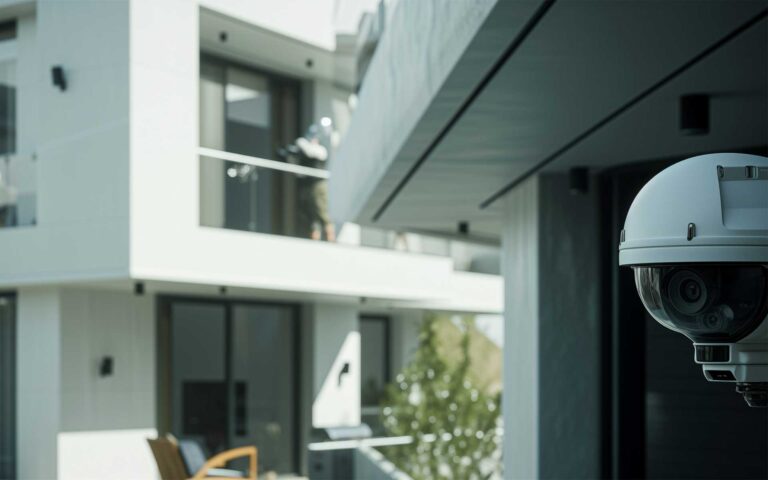
Surveillance supports both deterrence and evidence gathering after incidents. We look at whether your CCTV covers the areas where violence is most likely to occur, whether monitoring arrangements are active enough to support real-time response, and whether footage quality and retention are adequate for investigation and prosecution purposes.
After-hours and low-staffing periods
Violence risk often concentrates outside core business hours when staffing is reduced, supervision is limited, and the physical environment feels less safe. We assess how your risk profile changes in these periods and whether your current controls are adequate given the reduced staffing context.
Lighting and environmental design
Poor lighting in car parks, building approaches, and after-hours entry points creates conditions where threatening behaviour is more likely to occur and less likely to be detected. We review external and internal lighting against the specific risk areas of your site, and draw on CPTED principles to identify where environmental design changes would meaningfully reduce violence risk.
Industries and Environments We Assess
Workplace violence risk is not confined to any single sector. Smartsec conducts workplace violence risk assessments across a wide range of environments in Perth and regional WA.
Health and community services face some of the highest rates of workplace violence of any industry. Retail and hospitality environments deal regularly with theft-related confrontations, intoxicated behaviour, and customer aggression. Local government customer service facilities are increasingly experiencing threatening and abusive behaviour directed at frontline staff. Schools and education campuses face incidents involving students, parents, and occasionally external individuals. Financial services and professional offices face risk from distressed or angry clients. And any organisation that has recently dismissed an employee or ended a difficult relationship faces a specific, time-limited window of elevated risk that needs to be managed deliberately.
In every case, the physical environment either helps or hinders. Getting an independent view of which it’s doing — and what to change — is the purpose of the assessment.
What You Receive
At the end of the process, you receive a clear, prioritised report that documents current physical security controls, identifies gaps relevant to your workplace violence risk profile, and provides specific, achievable recommendations structured by priority.
Findings are mapped against your WHS obligations, giving you a defensible record that demonstrates your duty of care was taken seriously and that physical controls were genuinely considered alongside procedural ones.
Reports are written to be useful — for the safety manager building an improvement plan, the operations leader justifying investment, and the board or executive team that needs to understand the organisation’s risk exposure.
Talk to a Workplace Violence Risk Assessment Consultant in Perth
If you’re responsible for the safety of staff in Perth or regional WA and want independent advice on the physical security dimensions of your workplace violence risk, Smartsec would welcome a conversation.
Contact the Smartsec team here to discuss your site and what you’re dealing with. There’s no obligation — just a straightforward conversation about your environment and how we can help you manage the risk more confidently.